
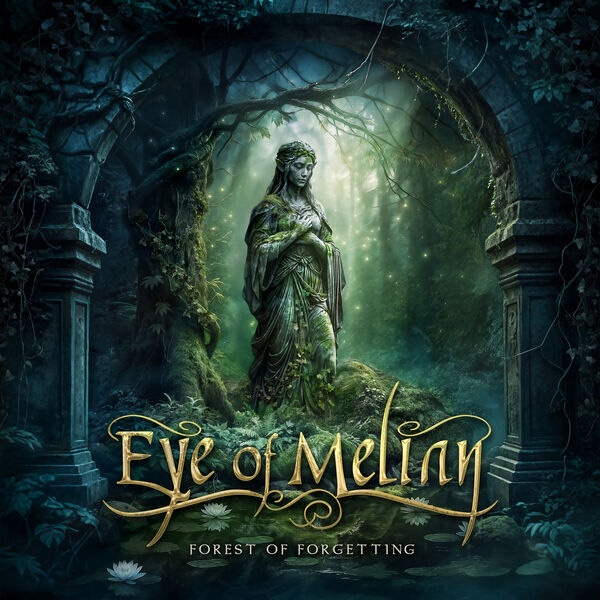
Second album by this Dutch/Finnish collaboration that straddles the fine line between cinematic new age and symphonic prog , with operatic colorations and tons of profound orchestrations. My honourable colleague Lazland and I both enjoyed the debut, he reviewed it in glowing terms (I deferred to his perfect essay), as we both possess a particular fascination for world class female vocals. The brainchild of composer Martijn Westerholt (Delain, Within Temptation) and orchestrater Mikko Mustonen, the crew features the stunning vocals of Johanna Kurkela (Auri, Altamullan Road, Tuomas Holopainen) as well as Celtic metal vocalist Leah and the legendary Troy Donockley in flutes and pipes, this follow-up also offers an instrumental version. Both are well within the true definition of grandiose, compelling and otherworldly, maintaining the Tolkien tradition of masterful fantasy.
The first three mid-sized tracks lay down the basic foundational qualities perfectly. Like a shrouded pathway leading into a spectacular forest ,“Of Willows and Shadows” sets the sonic direction , that will traverse many landscapes , determined to find the final respite. The elegance of the twinkling piano, the eloquence of subtle strings, and an angelic voice combine to enthrall instantly, gloriously majestic and expansive. Johanna is not far from the Sarah Brightman school, executing impeccable control and fluidity. The haunting main melody is like sticky honey, adhering immediately into the nooks and crannies of the soul.
“Borne upon the wind’, the impetuous “Symphonia Arcana”, together with “Child of Twilight” transport the mind into some distant trance, eyes closed and yet transfixed in resolute introspection, as if a soundtrack of a movie playing in one’s brain. Melodically and lyrically, both the resonance and prose (from American lyricist Robin La Joy) glide above the lush orchestral interventions, with enough variation to keep the listener on edge. The stupendous choir work is also most noteworthy, creating the much-vaunted celestial symphonic bliss, exceptionally evident in the paroxysm of the finale. The same applies on the third piece, with a different melodic attachment and a swooning sense of darkness.
Speaking of which, “Elixir of Night” has Troy’s magic pipes navigate the natural cycle of obscurity, where a sleepy gentleness within a piano lullaby exudes the emotions of an eventual sunrise and the longing for a new day. The Brightman touch is prevalent here, a sophisticated vocal flutter, propelled by dense choir and brass production. Beautiful music.
“Blackthorn Winter” sensibly exhibits the sonics of winter, an arduous seasonal reality that pushes the cold boundaries of human survival. It’s deliberately slow-paced with weighty arrangements from both orchestra and choir, like a snowstorm turning into a blinding blizzard. Yet all along, the shimmering vocals beckon like a frozen siren, courageously soldiering on into the gale. As I write this, the snow is falling unrelenting again, the most prolific winter I have witnessed in decades. As the morning sun appears, “Lady of Light” brings a sense of warmth and I daresay comfort, a swooning, easy on the ears ballad that presents a tender side in terms of vocalizations, the composer clearly maintain the light and dark contrasts throughout the production.
Back to theatrical bombast with an overt Northern Celtic feel, the showcase piece “Dawn of the Avatars” has the Donockley pipes whistling ardently amid the colossal choral group, with a particular attention aimed at the string section, providing the cinematographic umbrella. Johanna is bold enough to soar effortlessly, a stunning performance that begs to be heard. The title track serves to encompass all the glorious attributes within this seemingly transcendental production, perhaps the least complex of all the tracks offered here. The impeccable restraint and salutary essences are portrayed with delicate attention melodically. Johanna hits the high notes like a true diva. Another faultless winner.
Further along in the timberland, far from any known settlement, “The Buried Well” a watery sense flowing with liquid precision nourishing the verdant canopy, another moment of reflective gorgeousness. “The Mirror” reflects on all the fleeting images, some precise and others blurred, a mystical sonic fog where legend and reality somehow coexist, often lovingly embracing the hushed voices of desire with the power of choir.
The brief “Nepenthe” and the final “Tears of the Dragon” (A Bruce Dickinson cover) close this elegant chapter with obvious reluctance, a full hour of overt escape and adventure, far from the never-ending madness of the current universe.
There are 4 videos up on YouTube and they are all splendid. Truly impressive Prog.
4.5 neglected woods