
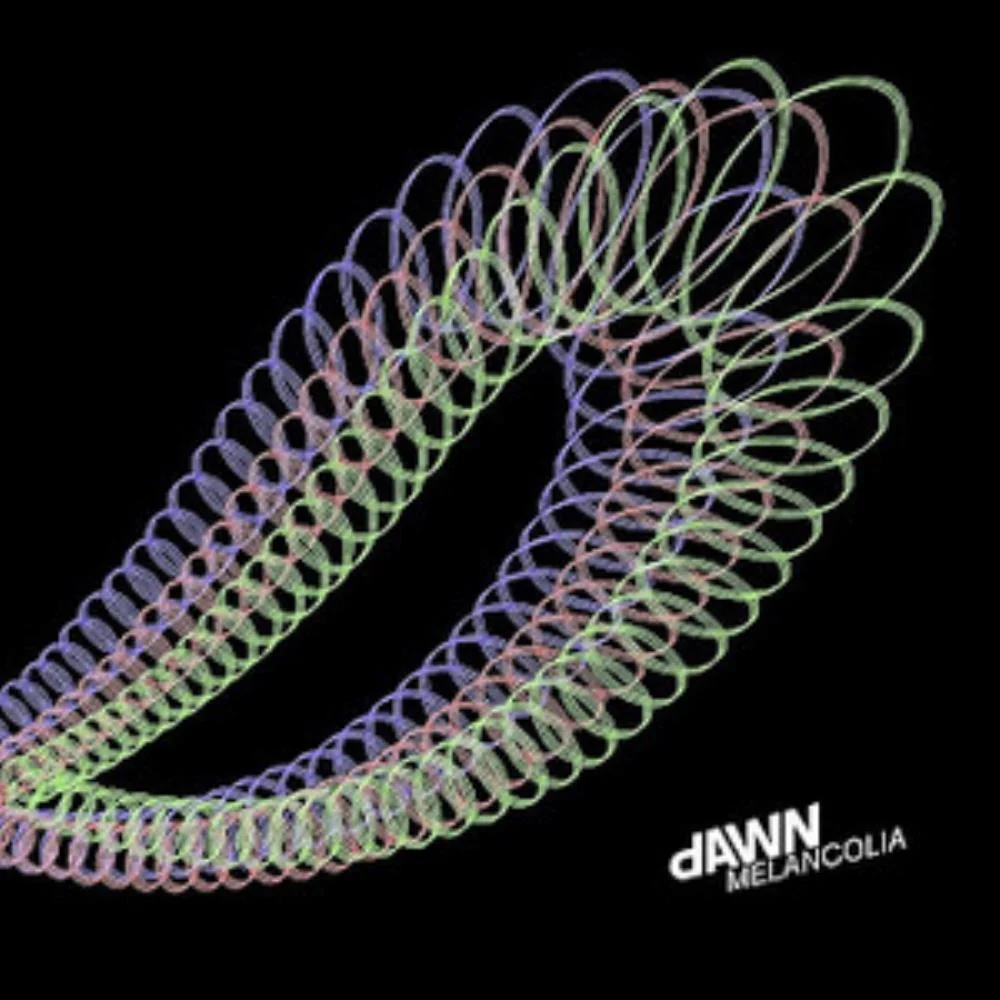
This talented Swiss band from gorgeous Montreux on the Lake Geneva shoreline have released three widely spaced (pun) albums, beginning with 2007’s “Loneliness”, subsequently followed by “Darker” in 2014, which I have reviewed in glowing terms, though both excellent efforts well received critically and by the fan base. Twelve years is a longtime, but prog fans are a patient lot. Their style is best described as dark symphonic, which remains obvious with the title of their third effort called “Melancolia”. Closest comparison may be French legendary band Pulsar, sharing some of the same attributes. Rumbling bassist Julien Vuataz and singer/guitarist René Degoumois are still firmly at the helm, both handling the imposing keyboard chores while new drummer Patrick Dufresne mans the drum stool. I got an advance copy and patiently waited for the October 30 release date to punch out this review.
The brooding “Falling Girl” illustrates the spirit of the album title, with a glimmering groove, the bass pumping relentless pressure on the twinkling keyboard layers and René’s most satisfying voice expressing the female tumble with subtle detail. I must confess , its Julien’s bass playing that really struck a profound chord with me way back when, and I am overjoyed to state, his bass parts are elevated even more to a blissful level. Everything thoroughly fits here, a modern shadowy symphonic track that relies on impact without countless sanitized layers of over-production. The instrumental work is constantly in a state of controlled free fall and should get some well-deserved airplay.
Suddenly panic on the morose “Afterall”, a shrugging of shoulders mood and a resistant elastic bass that scours ‘the nowhere to go, nowhere to hide’ complaint, an insistent synthesized siren behaving like an ambulance searching for the nearest succor and high-pitched vocal choir that suddenly vanishes into the fog of time.
The first notes on “The Flying Man” hint at vintage Italian band Goblin, as the keyboards retain a gruesome tone, suspended droplets of sweat exuding from a voice trying to escape for the dour routine of life on land. Madness can make one want to fly is the underlying theme and the forlorn delivery is definitely loaded with vocal trepidation , with Vuataz’s primeval bass guitar carving up the screeching organ-drenched skies. Damn, this is so tasty and raw, the flight time clocking in to nearly 8 minutes. Bon voyage, Icarus.
Three shorter tracks that could easily be stitched into one, “If” urging a more melodic blues guitar line, the tempo solemn and repetitive to fully raise the melody and the marvelous vocals, René a master of both while Julien and Patrick keep the ground shaking in exuberant delight. A hymn dedicated to doubt, the flute synth patches creating a mellotronic crescendo to die for, once again underlining the melancholic theme of this opus. That symphonic touch continues unchallenged on the slightly more turbulent “Lose Control”, where jagged rhythmic manipulations yearn to explode over the wish to evade any kind of hegemony, a willful desire to be free. Unchaining a sparsely fueled, almost vintage sound, where the bass throttles up into overdrive and flings the listener into the wild blue yonder. “Nothingness” is the terminus, with the orchestral keyboards remaining firmly in place, nailed by a recurring bass line that seeks no outcome. Unexpectedly, a Floydian guitar comes momentarily through the veiled filigree, electronics discreetly drawing the furthest extremes, joining in with tingling sensations of emptiness. Absolute nihility, yet utterly gorgeous.
As perhaps expected from any worthy prog band, the finale “Waiting for the K” is the epic 12-minute juggernaut that cannot disappoint as it’s the sum parts of the entire concept of the album. The dazzling echoes of the e-piano, the mellotron cascades and the wistful voice encourages abandon into the whirlpool of sound, the hypnosis taking hold, where ‘the need to escape’ becomes too overbearing to resist. Slivers of translucent guitar shards, halting rhythmic pulses, swirling spools of noise and that damned bass holding the front. René grasps the microphone with a sudden surge of anger, as the entire arrangement rises to a torrid level, a churning despondence highlighted by powerful choral work, this begs to be heard. His guitar work is resplendent in its audacity and detail, a perfectly executed solo spotlight that shines ever so brightly. This is an epic that needs to be not only heard but venerated.
Dawn, no more long hiatuses, encore s’il vous plait. Easily among the top albums for 2026.
5 Marquis de sadness