
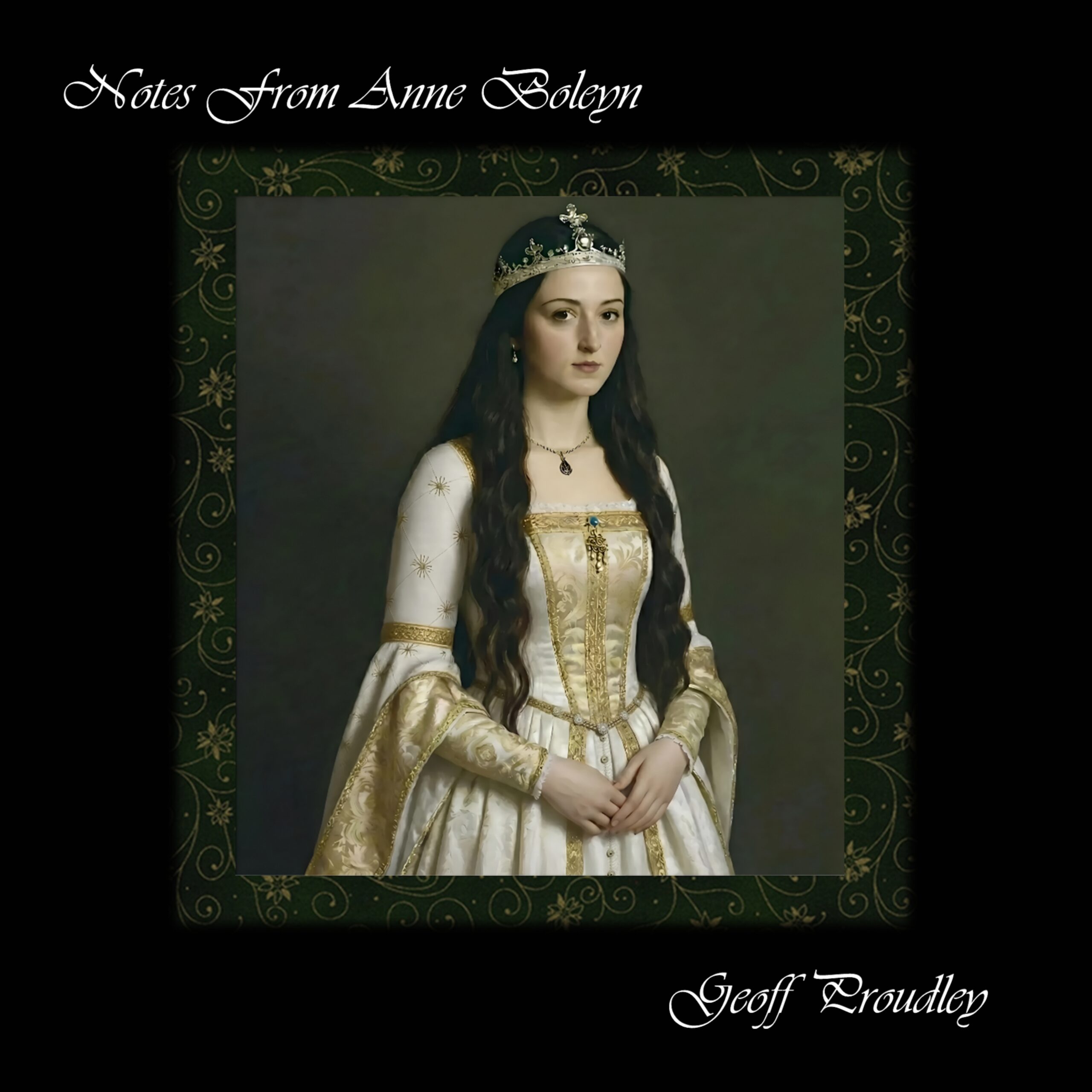
 Three astute reasons why the Prog Rogue has committed to this artist’s music to sit among his favourites, a freedom of choice that music can surely always provide. Firstly, Geoff is an accomplished musician, mastering a massive library of sounds on his electronic gear, including many organic instruments as well and composing flawlessly intricate specimens of medieval-tinged music. Secondly, he is evidently an avid historian as well, another personal liberty that one can learn from the past in order to better understand the future. His stunning previous opus, the magnificent “K of A” (Katherine of Aragon) was dutifully reviewed and honored with the entire starry spectrum at my disposal. Last but not least , I have been an openly critical of the relative disuse of an instrument that , in my humblest of opinions deserves a much better fate, not just in progressive rock but in all forms of music in general. I have named The Harpsichord. This masterful opus has plenty enough to satiate my very dry wishing well, and, just for that alone , I am ecstatic. The twenty-three tracks presented here feel like pages from a long-lost notebook, perhaps even recently discovered in some secret library , comments from the hand of the hapless Anne Boleyn, she of Rick Wakeman fame and Henry VII shame. Reading like a diary of her ordeal, personal moments of her trials and tribulations, her innermost thoughts on her own failings as well as the conspiratorial nature of the Tudor court, all translated into instrumental music of the very highest order.
As such, an in-depth track-by-track descriptive would be a completely foolhardy exercise in tedious complication, as this kind of work requires the classic concentrated effort of sitting comfortably with headphones on, reading the copious notes as if a history book and letting go of the outside world entirely. From the onset of the exquisite opener “From Blickling to Hever” and arriving 42 minutes later to the fateful “I am Come Hither to Die”, the listener is duty-bound to let the mind wander through the various scenes, most of them well within the 1-2 minutes in length, literally expressing my favourite definition of prog “Music for the imaginary movie in your own mind”. The imagination of the artist begets the thoughts of the individual audience member. Is there any finer form of relationship ?
That glorious crispness offered by the baroque harpsichord resonates on a multitude of attractive and densely melodic oddments (“We Three Boleyn, la Petite Boulain, My Lord Percy, An Injured Heart, Masque Dance, Patience Will Be My Song, A New Order, and Still I Will Prevail) , each gem played with passion, flair and heartfelt commitment. Organ and synthesized flute also appear regularly, so as to keep the flow of inspiration in a state of palpitating reverence, often embedded with orchestration.
The ornate piano does take the spotlight on delicate pieces like “Learning Grounds”, “The Lady Anne (Henry’s Obsession)” and “Elizabeth” (many seem to forget that Elizabeth I was surely one the of the greatest monarchs in history and the daughter of Anne Boleyn), both melodies crushingly haunting as well as utterly memorable. Yet, the piano on the two final pieces , the achingly harrowing “All This for Such a Little Neck “ and the previously mentioned finale verges on genius and easily on par with the golden caped Yes legend.
There are also intense moments of emotion , such as on the glittering melancholia of “We Shall Have Sons” where Proudley gets to express his arrangement savvy on orchestrating grandiose effects. The galloping horses’ effect on “Riding Out to Hever” has all the instincts of a fox on the run (Anne being the poor animal) with harrowing choir work to add some ominous doom to the chase. “Procession” feels like a scene from “Robin Hood”, pageantry on full sonic display, church organ blaring. On “Traitor’s Gate”, the orchestral foundation skillfully demonstrates the ordeal of travelling to her fate, the tragic and deadly barge navigation to the Tower where Anne Boleyn will ultimately lose her head. The crow has the last word.
Needless to say, fans of exquisite music need to search this one out, though all there of Geoff’s albums are required ownership and eternal enjoyment. Coming in a masterful 52-page book , this is not just your usual modern stream download but an outright collector’s item, whether historian or prog fan (I am lucky to be both) where either
can find equal amounts of divinely inspired pleasure. Very proud of you, Geoff, your music really touches my soul !
Music like this only comes around a few times in life, it needs to be enjoyed while you can.
5 twists of fate