
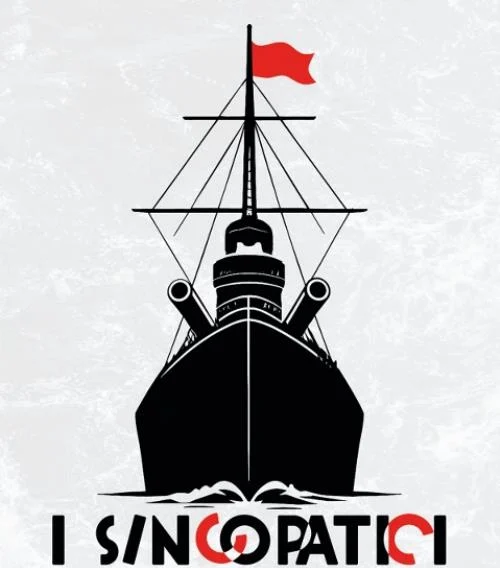
 A big Grazie to Andrea Grumelli for sending me this album for review. He is a bassist with Aether; a splendid jazz-rock band I reviewed a while back. He is also a member of this outfit , bringing along his drumming partner Teo Ravelli to join keyboardist/guitarist Francesca Badalini and Silvia Maffeis’ sultry violin. The Battleship Potemkin is a historical event that instigated the first Russian Revolution, in overthrowing the Romanoff monarchy, that subsequently led to the eventual Bolshevik coup that installed the Soviet Union. Effectively replacing one form of corruption with another, changing the colour from white to red, ‘a great leap for mankind’ that thankfully collapsed in abject ridicule 80 years later. The 1925 Sergei Eisenstein ‘s 1925 movie, remains one of the very first cinematographic works that has stood the test of time, regardless of its overtly propagandist message. But we are not here to discuss politics (a totally worthless waste of time, in my opinion) but artistic accomplishment, a cause way more worthy of praise and even adulation.
Five acts totalling just over 40 minutes is on the reel projector, so let the mutiny begin! The scratchy austerity on “Uomini e Vermi” immediately settles the score with densely echoing and oppressive sounds, clearly evoking a serious subject matter as opposed to possible amusement of any kind. The first two minutes give way to a pliable bass line and piano redolence, the violin and percussives entering the fray, gradually picking up steam, as the dreadnaught’s engines rumble into life. The classical aspects are overt even though the modern instrumental interpretations may clash for some purists, the harsh guitars are grainy and gritty like the movie, the despondent piano somberly underlining the despair. Inserting gurgling synths adding a modern twist to the propellers.
With a sailing time of nearly 10 minutes, “Dramma Sul Ponte” is where the story unfolds , where the deck is overtaken by insurrectionists, and chaotic dissonance embraces the hopeful courage of convictions. The strained sounds are colliding, collapsing and colluding with misdirected screeches from the painful violin, with hammered piano droplets that ooze like blood spurting from veins, and cymbals slashing and pummeling any resistance. The tension is beyond palpable, its monstrously aggressive.
“Il Morto Chiama” suggests a distant siren urging on the revolt, promising victory and the spoils of war, yearning for a new world. The Badalini electric guitar is crystalline, clanging with the sombre keyboards and that forlorn violin, while Andrea slices the low end fearlessly. The pace is profoundly idealistic, searching for sonic balance, amid the crushing electronic backdrop, the low grumble of a weighty anchor dropped for good measure. The dynamic piano shows little mercy or reprieve from the angst, used almost like a percussion instrument.
On the other hand, the sonic extremes are conveyed on “La Scalinata di Odessa”, first with a delicate, unexpected and almost pastoral onset, with pretty piano chords and a lovely set of fretless bass licks that challenge any sense of impending anger or violence. Yet, the harrowing piano takes on the role of a rallying force, egging the crew onwards unfailingly, the torpedoes be damned! Like a staircase, each step requiring more and more effort, the robust arrangement veers into an oppressively eruptive maelstrom of fury and despondency. It’s a tough listen, but inevitable when taking life risks, gambling on the slight chance that triumph will prevail. Intense dissonance and painful experience. The mighty concussive winds seals the chapter.
All for one and one for all, the outcome forever unclear, “Una Contro Tutte” offers no clear conclusion, as history will ultimately be the judge of whether the lethal anguish was at all necessary. The sounds are now much more contemporary, severe rock guitars bulging the rivets, the booming bass disruptive, forcing the list and the rhythmic assault nothing short of drastic. Swirling synthesizers blend with the vertiginous violin forays, the mayhem still uncontrollable, the outcome vague, the violin crying as only it can. Through the eerie post-battle mist, the piano and violin unite in a successful dance of having overcome the odds as well as the rules. A new world beckons, but will it be a better one? Only 80 years later will we know the truth.
4 red cruisers