
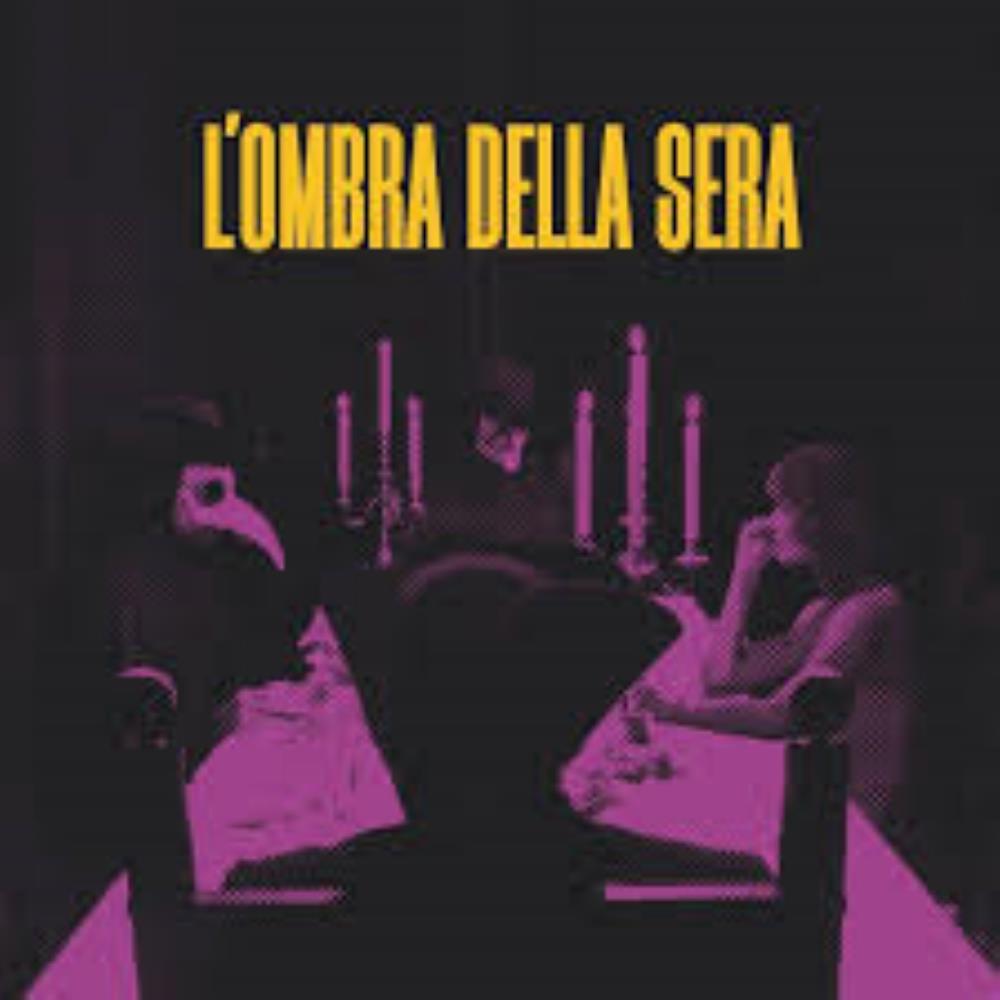
 I noticed a particularly interesting trait concerning prog from Italy, going back decades in fact. There seems to unexpected lulls of Italian releases that may last a few weeks or even months and then BAM, an avalanche kicks in without any advance notice. In a way, it must be an Italian custom to wait for all the food to be ready, for any feast to begin. Why would it be different in music? The debut 2012 album from L’Ombra della Sera came as an offshoot side project, of the band Maschera di Cera, which did yield a slew of fun albums, namely the phenomenal 2020 “S.E.I.”.
The celebrated wunderkind bassist/producer Fabio Zuffanti uncorks a new vintage of fine progressive rock, bringing along some trusted friends such as the astonishingly gifted quartet of Alessandro Corviglia (keys and vocals), Agostino Macor (a stunning keyboardist), excellent drummer Andrea Orlando and sax/flutist Martin Grice, names we all know and admire. The premise originally (and thankfully continued here) was for the core Maschera players to perform classic soundtrack music, made famous by the legendary Goblin, as well as Cherry Five, Riziero Ortolani, and Berto Pisano. The cinematographic and darker symphonic sensibility is reinforced with a strong presence of vintage Hammond, Moog and mellotrons. Ten tracks, ten glorious snippets of a movie you can imagine in your own mind, getting to choose your own images, scripts, cast and props as it matches your interpretation of the score. Fun. Some of the tracks are complete reworkings of tracks from their debut as well as adding a few new gems to the mix.
Spooky crystalline tingling shuttles the fright into a comfort zone , not too distant from Tubular Bells /The Exorcist, eventually morphing into a belligerent rumble led by a morose bass and morbid drum shudders, a solitary flute providing the only beauty. As the tempo increases, Martin Grice slices through the groove with a scouring sax blurt, the grumbling organ shouldering the blame, and the bass remaining menacing. That was “Albert e L’Uomo Nero”, pleased to meet you, Piacere!
The shift to the romantically tinged “Gamma” has all the classic ingredients of 70s-80s soundtrack music, a seductive and amorous synthesizer melody, surfing over the trilling e-piano, echoing bass and subtle percussion. The sonic sultriness drips with unabashed languor and abject submission, a mellotron supplying the grandiose affectations so prevalent in the RPI tradition as well. Both the piano and the keys are spot on stunning. An absolute killer track.
Like a street artist holding his paintbrush up in the air asking for added inspiration, ‘Rittrato di Donna Velata” unambiguously translates as a ‘portrait of a veiled woman’ and oozes that classic ‘far niente’ , easy-going nature that defines the tragi-comedy that Italy is and always was. The segue “Fantastic Fly” is utterly seamless , as the sassy theme elevates to a higher plane, seducing musically like when one first saw Monica Bellucci, a bold, proud and gorgeous visual, as the mask has now fallen, revealing the bombastic expression. The keys, bass and drums maintain the triumph at the altar of the orgasmic sax.
Back to sombre temperaments on the harrowing “A Come Andromeda”, a slight classical hint in the flute theme, a delicate flutter held down by a snarling bass, thumping beats and a mellotron mass. Fabio then takes matters in hand (or fingers) by unleashing a brooding bass line that shifts the arrangement into jazzier overtones (e-piano and sax), where the sophisticated perkiness slowly evolves into a full-on blow out that has way more meat than potatoes (or pasta).
A funky beat, boiling bass and that darn clavinet cause quite the stir on “La Traccia Verde”, a bopping, pulsating booty shaker that will have us all dancing in the streets , gelato in hand , smiling at all the lovely ‘bambole’ (dolls) parading their health with brazen pride. Macor unleashes some deliriously effective Fender Rhodes lines, a slick organ rampage that would make Brian Auger beam with delight. The adamant sax reigns supreme, rousing all kinds of temperatures, the perspiration erupting on the brow. Another convincing selection.
The mellotron positively detonates on the intensely vocalized “La Ballata di Carini”, handing the opportunity to give the raspy Corviglia the microphone and a reminder that RPI is part theater/opera/folk and lots of traditional prog settings. Nothing fancy, as the argument-laden Italian voice effects add to the ongoing conversation. Of course, a church organ comes in for the kill, within a circus-like atmosphere, not far from Fellini-esque buffoonery. The elephants in the room remain the mighty Mellotron and synths setting the stage on fire.
How about a nearly 20-minute challenging journey to another windy day in Torino, a sonic trek that opts for a more experimental incursion into the absurd, a hodgepodge of intersecting melodies, bathing in undisguised dissonance with cyclical piano chords, and a sullen saxophone searching for its shadow. The KC influence does not waste any time in blending in rhythmic ferocity with shards of broken mirror reflections, a flickering light bulb hanging precariously from the peeled paint ceiling. The piano lingering in oblique discomfort, the tormented voice haunting, palpable organ grit and a fledgling flute, all fall prey to a bellicose bass/drum assault that takes over command of the arrangement, Fabio sounding like classic John Wetton circa Bible Black, and Orlando ‘brufordizing’. Obsessive and deranged, as if alone amid a crowd of faceless wanderers, a cosmic waltz takes the shape of things to come, reflecting on the human condition. As always, the inevitable eruption lies very near in waiting, detonating into a savage rampage that slays both red lizards and black larks, lasting long enough for the peaceful afterglow that arrives after the storm has passed, and the winds have died down into a whimper. If you want to be pushed into a corner and threatened, this is now your way out, a defiant saxophone leading the way to salvation. Ridiculously amazing.
A hundred bells chiming indicate the sign of command as Corviglia painfully pleads his case, a love song of bare-boned symphonics and a gentle lilt, though somewhat brooding and ominous. A moment of lucidity that prepares one for another colossal epic, this time the final 11-minute curtain closer: “A Blues Shadow”. As the title suggests , this piece is all about feelings, sensations, and the pain that comes with caring too much or not enough. Densely communicative via massive voice effects, shuddering backdrops of noises and a desolate piano calling the shots, the restraint is palpable, almost verging on the absurd. You just know this is going to explode any second. Fabio shoves the bass into the cacophonous maelstrom, and the incredible Orlando goes from drumming to bashing like a maniac, the perplexed sax blaring like no tomorrow. ‘The Omen’ revisited (not meant to be funny!), as the psychotic pace just keeps revving into overdrive, its ‘pazzo’, and totally delirious, over the top magnificent. The bombastic finale worthy of the Italian classical composers. The velvet curtain is down. Applause, standing ovation. Encore!
This should go down like a storm, a future classic if enough get the drift.
5 black secrets