
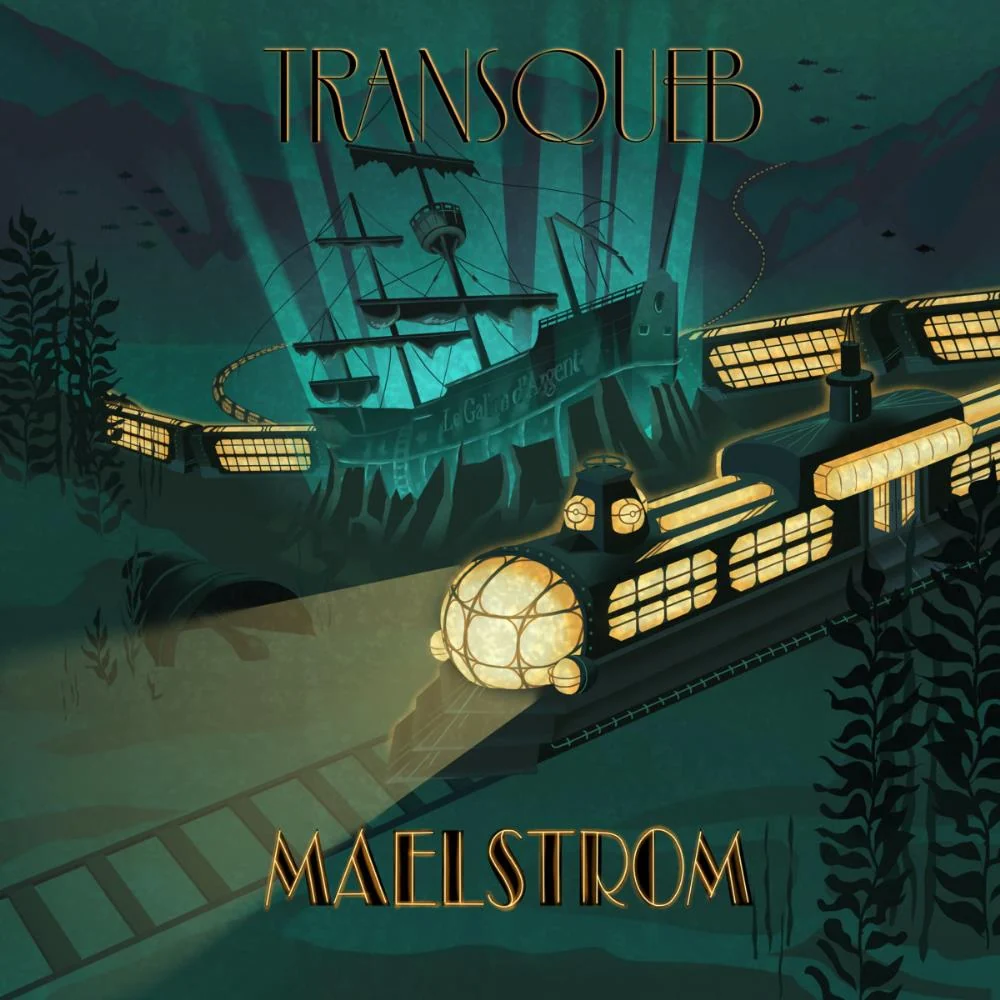
Second rather duskier chapter for these young Quebec jazz aficionados, a balancing act between a respect for the hallowed fusion tradition as well as daring to venture into differing symphonic tonalities and psychedelic stylistics. Here is the current line-up: Jeffrey Gagnon on guitars, saxophonist Maude Gauthier, Raphael Coté on bass and drummer Nicolas Gosselin are back, with Yannis Kraus (guitars and keyboards) having left after the debut “Station”. Guest Francis Grégoire takes over the ivory arsenal on most tracks. Nifty album covers always inspire this writer and I feel great tackling this opus.
Like the shifting sands of North Africa, “Dunes” advances a sparse and arid guitar introduction that is rapidly taken over by a scurrying bass line that races across the rather relaxed sun-drenching saxophone and windy keyboard gusts, as if a dromedary race was being umpired somewhere in the middle of the Sahara. Gauthier expresses her brassy style with considerable aplomb, unafraid to kick up some sand when prompted. Gosselin keeps the caravanserai in tempo, adding just enough pace to the smooth colours. “Resonances” sustains the cadence (soutenir le rythme) with a tempered nuance, as witnessed by occasionally pure jazz blowout from Gauthier, that eventually veers into more experimental horizons, the storm clouds colliding with some viscous guitar headwinds that swelter in acid rain droplets, turning the mood into darker tones. Undeterred, the saxophone regains control with a return to the original sedate breeze. The ghostly bass resettles the atmosphere into a groove, where the onus is on Gagnon to show off his considerable skills on the electric guitar, as his control evolves into a constant expansion, leaving Gauthier to retake the lead. “Les Cloches d’Ahuntsic” roots itself firmly in the experimental fusion side, where temper replaces speed, painting an aural picture of seeing the outskirts of Montreal’s many churches from far away Drummondville.
The second segment is the three part “Galion d’Argent”, the promise of symphonic angles becoming reality, structured more like a classical prog epic. Gagnon excels on acoustic guitar, as part 1 is as bucolic and pastoral as it gets. Next, it’s the sensual showtime for the saxophone to seduce the ears with restrained serenity and she does a masterful job as the arrangement shifts to a jazz-lounge feel, the bass bopping with discretion, the cymbals splashing and the guitar busy laying down all kinds of chords. Part 3 is the longest track and its the finale that seeks to crown this album with all its merits in full view. It’s also the proggiest piece, all forms of dissonance tossed at a deviant bass line, choppy percolations on the drum kit, then a jazzy slow dance, rocking back and forth in a seductive embrace. A mini-bass solo always works to alter the attention span, and Coté unleashes a sublime flurry, not only technically precise but loaded to the gills with passion. Standing ovation (but I am a bass freak, okay!). The swing towards an orchestral climax is overt as the musicians combine to raise the roof into a melodic vortex of splendored notes , including guest Grégoire’s thrilling piano venture. The album clocks in at 32 minutes and I must admit truthfully, I was still pining for more. This band has a future and hopefully, I will attempt to seeing them live in a concert setting.
4 turbulences